
Decision Tree for Frontline Practitioners
The decision tree tool provided here can help you work through what to do if you see or hear something concerning. For now, we’ll focus on the very first box: Notice and Identify. We will be discussing:
- what behaviors are important to notice,
- how to identify whether what you are seeing or hearing is of concern, and
- how to decide which situations require action and which do not warrant action.
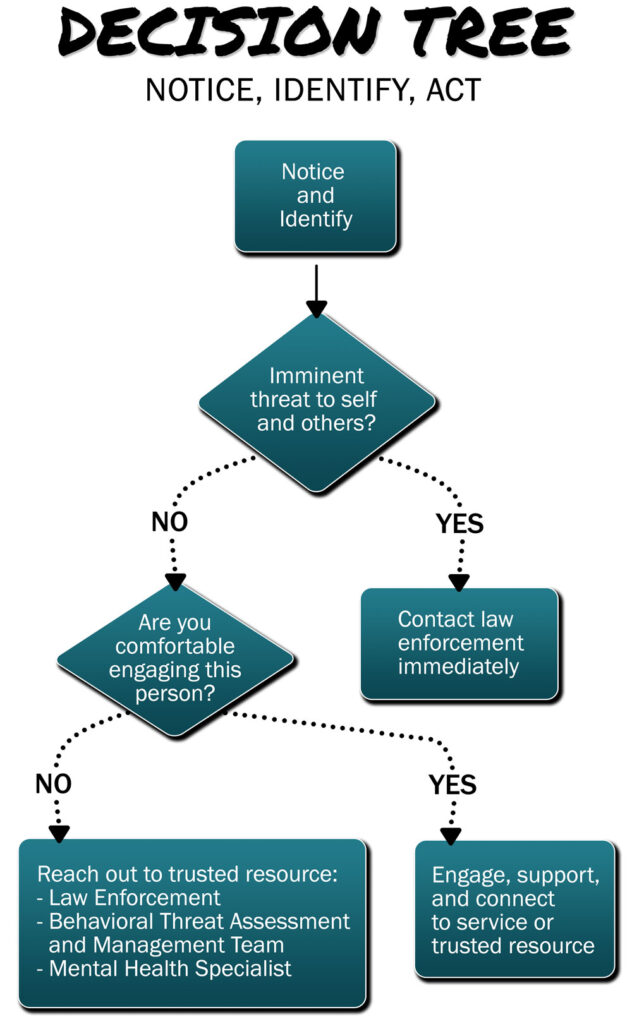
Step 1: Noticing Behavioral Concerns
The first step in the decision tree is noticing something. It’s important to notice when there may be a concern. This is the first step toward being able to identify options for intervention.
Before we talk about what behaviors you should pay attention to, it’s critical to recognize what types of actions you are not being asked to do. We are not asking you to diagnose, treat, monitor, or stereotype individuals. Diagnosing, treating, or monitoring individuals who display concerning behaviors is the role of others within the community who have been specially trained to do that work. Stereotyping or profiling individuals is never acceptable, as that type of behavior is not only hurtful, but can reduce trust among community members. Trust is a key component of healthy communities.
Profiling and Stereotypes
Individuals may see, hear, or learn about any of these behaviors. It is important to understand that the behaviors listed here do not necessarily mean that someone will engage in violence. For instance, just because someone is choosing to sit alone (e.g., experiencing sadness, depression or isolation) does not mean that they are planning to engage in a violent act. Rather, you should think about these as behaviors that suggest the person you are concerned about may require assistance.
There are behaviors and characteristics that you should not consider concerning. These include:
- Race or ethnicity
- Gender
- Gender identification
- Sexual orientation
- Nationality
- Manner of dress
- Religion or religious affiliation
- Religious practices