
NTAC Report on Targeted School Violence
School safety is a national priority, particularly given the rise in targeted violence in K-12 schools. To help improve school safety, the U.S. Secret Service National Threat Assessment Center (NTAC) conducted research and published a report, Protecting America’s Schools: A U.S. Secret Service Analysis of Targeted School Violence. This report studied 41 incidents of targeted school violence in K-12 schools in the United States from 2008 to 2017. It offers analysis on the motives, behaviors, and situational factors of the attackers. The report also looks at the tactics, resolutions, and other operationally relevant details of the attacks. This data presented here is valuable in identifying some patterns that you should also be aware of when making assessments or building prevention programs.
Demographics
The attackers were mostly men (83%). Most of the attackers were white (63%), six were black (15%) and two were Hispanic (5%). The age of the attackers ranged from 12 to 18, with the average age being 15. Four (10%) of the attackers targeted schools where they were no longer enrolled. Either they were transferred to an alternative school, pulled out before being expelled, graduated, or were a middle school student who attacked his former elementary school.
Motives
Most of the attackers had multiple motives for carrying out their attacks.
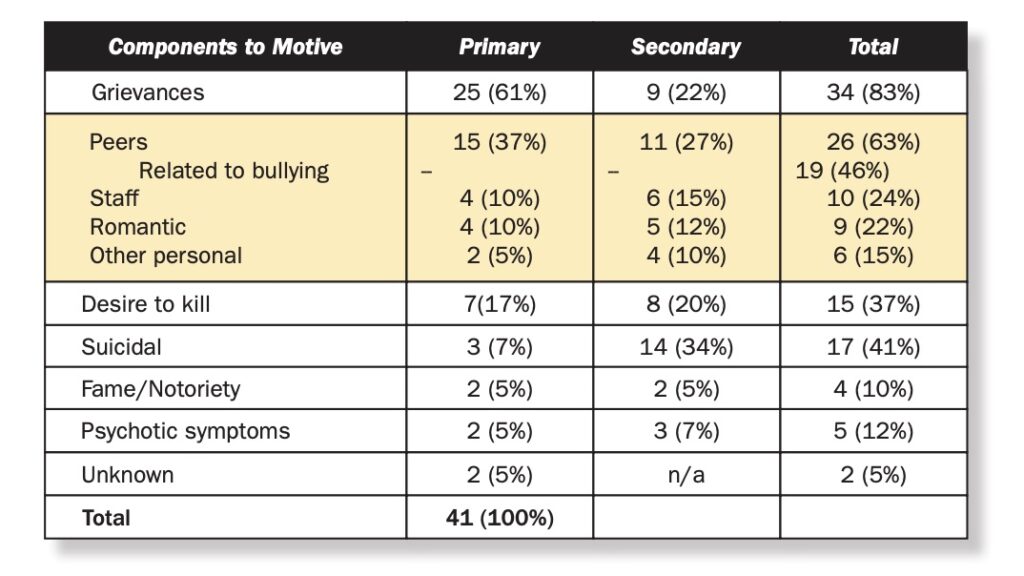
Retaliating for a grievance was the most common motive for the attackers. The most frequent grievance included peers (63%), usually related to bullying (46%). Aside from bullying, other grievances included ongoing conflicts between students or anger over a specific event or situation among classmates.
Other grievances involved school staff (24%). In four of the attackers (10%), grievances with teachers or administrators was the primary motivation and the school staff were specifically targeted in those cases.
Nine (22%) of the attackers had a grievance due to a romantic relationship as the primary or secondary motive.
Other personal issues were the motive for six students (15%), which included anger over a failed drug test at school or retaliating for abuse or neglect at home.
Targeting
In 73% of the attacks, a specific person or persons were targeted. In six attacks (15%), a specific group was targeted (e.g., bullies, preps, jocks).
Planning
About half of the attackers engaged in observable planning behaviors 51%) and 12 (29%) engaged in three or more types of planning behaviors. The most common planning behavior was weapons research and selection (n=13, 32%), which included conducting online searches, reading about weapons, and asking others about weapons experience.
The next most common planning behavior was using deceptive practices (22%) to hide their activities and avoid detection, including telling parents materials were purchased for chemistry class, claiming needing a weapon for protection, and waiting until late in the evening to manufacture weapons.
Seven attackers (17%) engaged in weapons-related planning behavior, like modifying guns or knives and stockpiling weapons. Seven attackers (17%) also documented their plans for the attack in writings.
12% of the attackers surveilled or researched the target, 12% planned the execution of the attack, and 12% researched prior attacks.

Law Enforcement Contact
49% had prior contact with law enforcement, including arrests or other encounters, like welfare checks. About one-third had previously been arrested or faced criminal charges, including violent charges (20%) and non-violent charges (17%).
Psychological Factors
63% of the attackers exhibited symptoms of depression, 60% experienced suicidal thoughts, 29% experienced anxiety, 26% exhibited signs of anger, and 20% had symptoms of psychosis.
Behavioral Factors
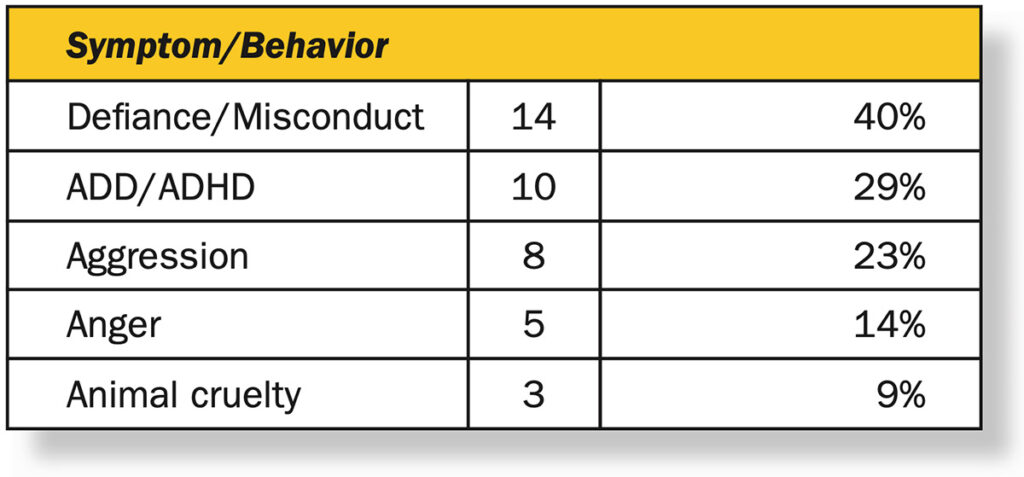
57% displayed behavioral symptoms, including defiance towards authority, poor impulse control, and other violations of social norms.
Neurological/Developmental Factors
20% of the attackers had neurological conditions or developmental issues, including developmental delays, cognitive deficits, learning disabilities, and symptoms or diagnoses within the autism spectrum.
Home-Life Factors
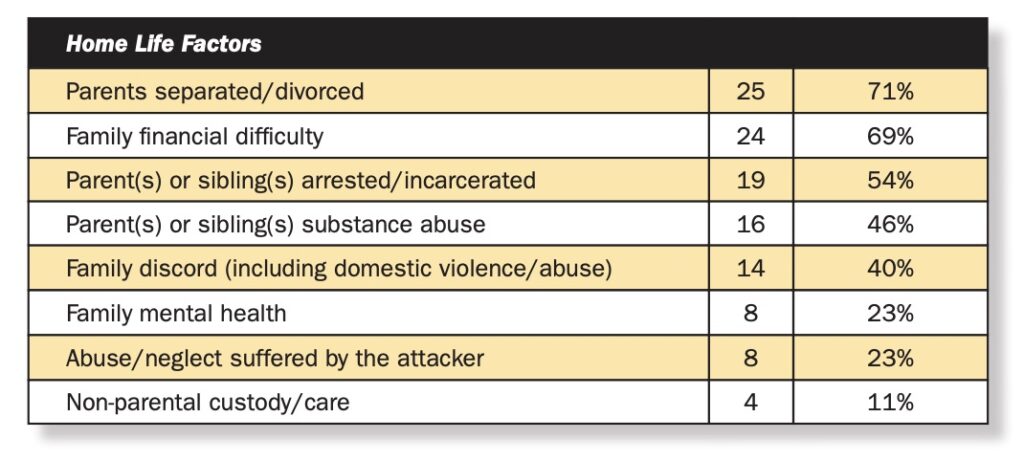
94% of the attackers experienced at least one of these home life factors.
Stressors
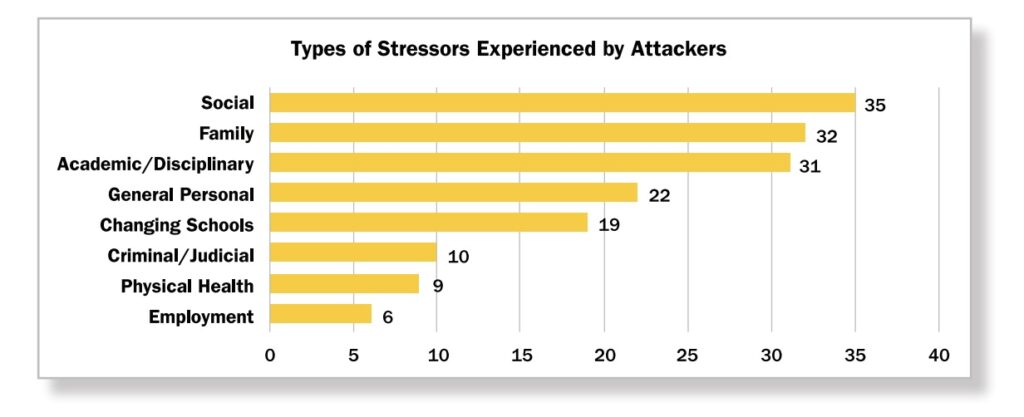
All 35 attackers (100%) experienced stressors, with nearly all (94%) experiencing one stressor in the six months prior to their attack, three-quarters (74%) experiencing a stressor within the month of the attach, and half (51%), experiencing a stressor within two days of the attack.
Social stressors included stress related to the attacker’s relationship with peers or romantic partners. Family stressors included family conflict, abuse, neglect, and financial difficulties. Academic/disciplinary stressors included failing grades and school suspensions.
Bullying
Most of the attackers (80%) were bullied by their classmates. In 57% of the attackers, the bullying was persistent and lasted for weeks, months, or years.