
Structured Professional Judgment Measures
Risk assessments build on findings from these types of studies by identifying certain characteristics an individual possesses, according to his or her life history and current disposition, which may provide an indication of the likelihood to engage in the outcome of interest. As stated previously, they cannot predict an individual’s future behavior.
These measures are called structured professional judgment (SPJ) measures. They are comprised of variables shown to have been empirically related to violence in the literature, such as the ones mentioned in the studies above. Borum points out that, “A structured assessment process that is systematic, transparent, and reliant on current evidence would serve the interests of both procedural fairness and substantive security, but a simple process of tallying risk factors is unlikely to be effective” (Borum, 2015).
SPJ instruments provide a list of variables, supported by empirical evidence, but stop short of providing the tally that Borum warned about. Instead, each item is rated on a scale (typically ranging from “not present” to “definitely present”), and the evaluator is left to use his or her judgment about the relevance of each factor and the overall level of risk based on the available information.
All of these measures are widely used in practice. Mental health specialists should pursue other internet-based training in them before relying on them in practice. Examples include training offered by Dr. Reid Meloy and the Association for Threat Assessment Professionals.
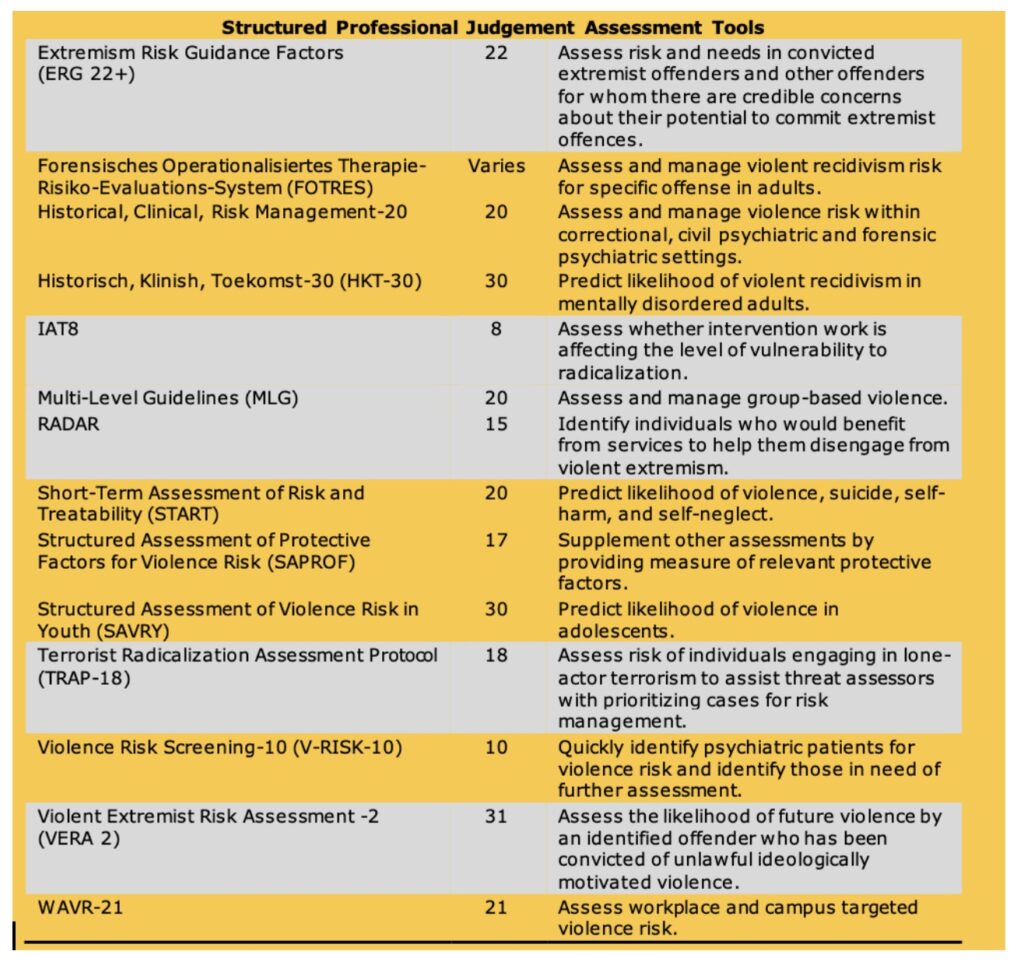
Terrorist Radicalization Assessment Protocol
One commonly used structured professional judgement measure is the Terrorist Radicalization Assessment Protocol (TRAP-18). It is designed for threat assessment of the individual terrorist and consists of eight proximal warning behaviors and 10 distal characteristics, described in the table below.
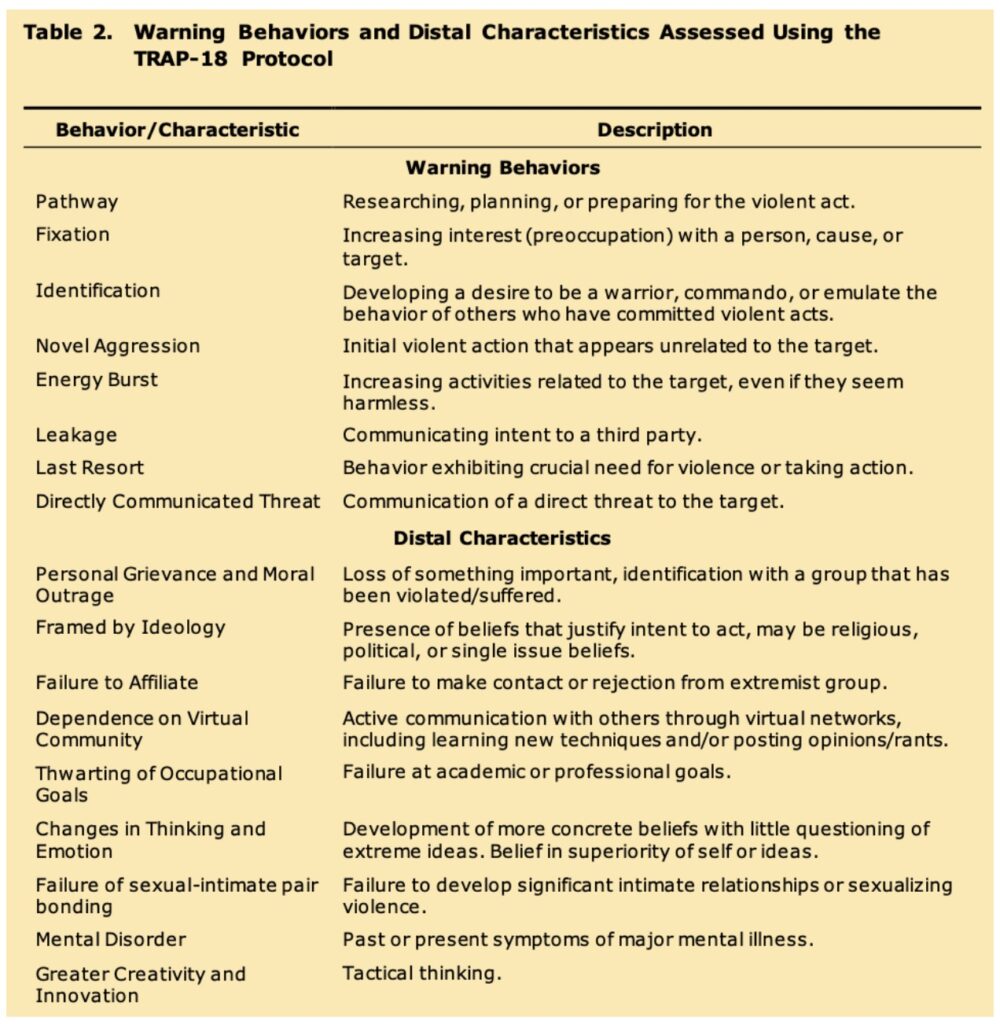
We strongly recommend that mental health specialists become familiar with one or more of these structured professional judgment measures. They should become trained in and learn how to use this measure as part of their initial and ongoing assessments of persons at risk for targeted violence.